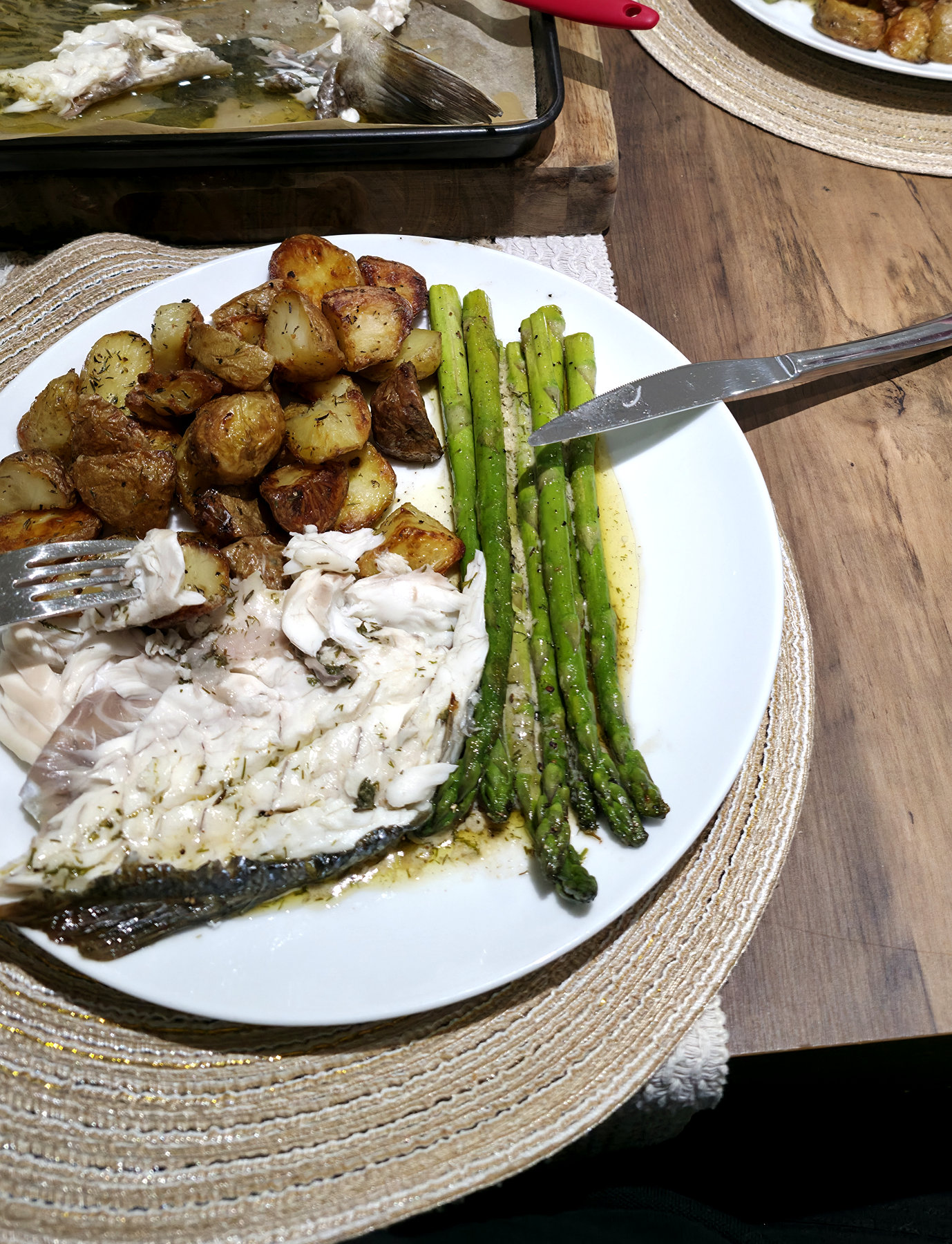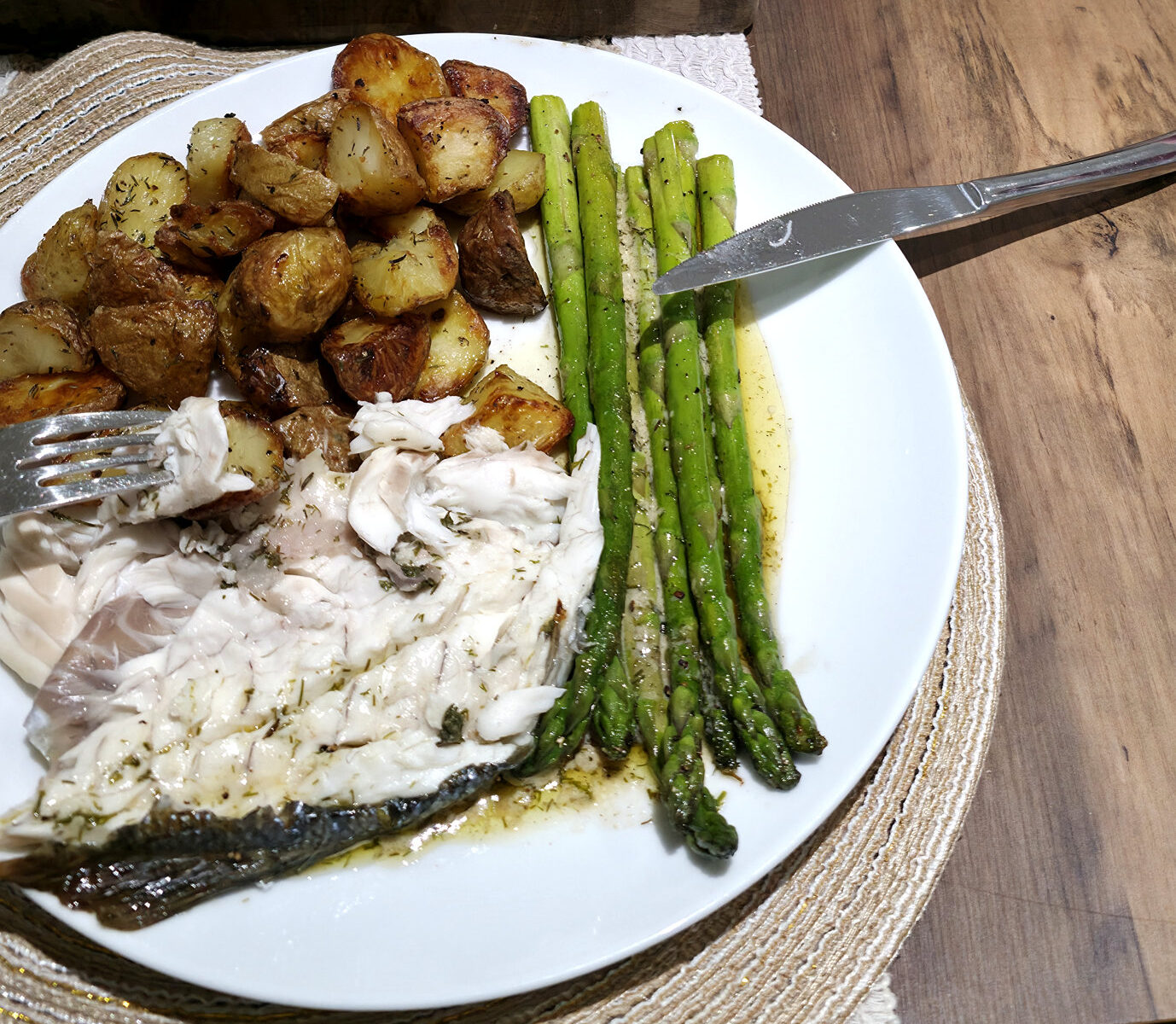
I don’t fish for sport; I fish to catch and cook. I also find fishing extremely relaxing. Give me a quiet stretch of the Anglesey coastline, a couple of rods and the sound of the sea and I’m happy. There’s something brilliant about bringing a fresh bass home and turning the catch into dinner. I caught this one off Anglesey on 20 July 2026 and cooked the sea bass supper the following evening. I want crisp skin, moist fish and a decent amount of garlic-and-herb butter, without doing anything complicated to a lovely fresh bass.
From Anglesey to the kitchen
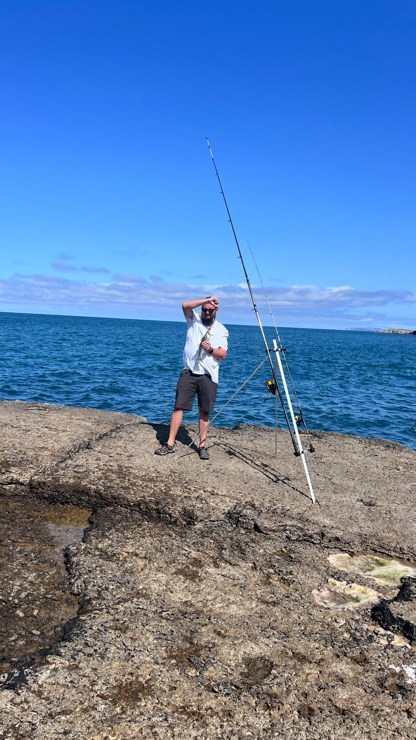
When I keep a fish for the table, I want to look after it properly from the moment it comes out of the water. I dispatch it promptly, bleed and gut it there at the shore, and get it straight onto ice. For the journey home, the catch goes into my temperature-controlled car freezer. Getting it home in good condition is every bit as important as what happens in the frying pan.
Back home, there’s one other job before I can start cooking: scaling. My approach isn’t glamorous, but it’s effective. I work with a fish-scaling tool inside a large bin bag, so I’m not finding scales around the kitchen for the next fortnight. I make three passes on each side, tail towards head, then check around the fins and belly for anything I’ve missed. After that, it’s a quick rinse, a thorough pat dry and into the pan.
SERVES 2 · PREP 20 min · COOK 15-20 min
Ingredients
- 1 cleaned, gutted whole sea bass, 500-700 g, scaled
- 2 tbsp rapeseed or light olive oil
- 30 g unsalted butter
- 3 garlic cloves, bruised
- 3 thyme sprigs
- 1 lemon, half in wedges
- ½ tsp fine salt; plenty of black pepper
- Optional: 150 g green beans to serve
- A heavy cast-iron or stainless-steel frying pan and a broad fish slice
Method
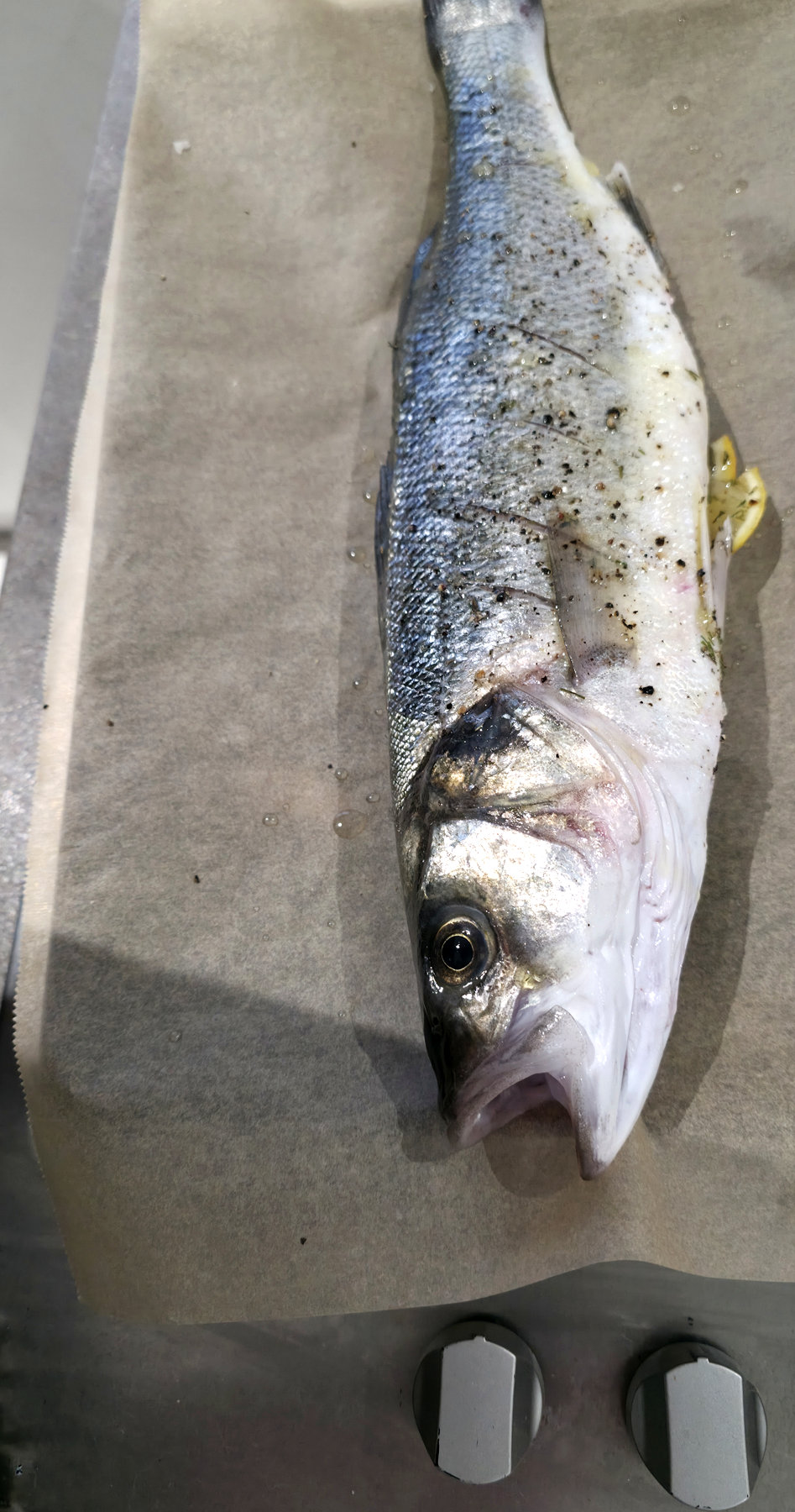
- Once the fish is home, I finish the preparation. I have already dispatched, bled and gutted it promptly at the water, placed it straight on ice and driven it home in my temperature-controlled car freezer. I scale the fish inside a large bin bag to contain the mess, using a proper fish-scaling tool. Starting at the tail and working towards the head, I make three passes on each side, including the areas around the belly and fins. I check for any scales I’ve missed, rinse the fish briefly, and pat the skin and belly cavity completely dry with kitchen paper.
- I set everything beside the hob first. Score each side of the fish with 2-3 shallow cuts through the skin only. Rub the skin and belly with salt, pepper and 1 tbsp oil. Let stand for 5-10 minutes while preparing the pan.
- I use a pan large enough for the fish to lie flat. Heat the empty heavy pan on medium-high for 1-2 minutes, add the remaining oil and swirl. You want hot, shimmering oil, not smoke pouring from the pan.
- I lay the bass into the pan away from you. Press gently for 10 seconds so the skin contacts the pan. Leave it undisturbed for roughly 5-6 minutes until the skin looks golden and releases without tearing. If it sticks, give it a little longer: forcing it off the pan is how I end up tearing the skin.
- Slide a broad fish slice underneath, support the fish and turn carefully. Reduce to medium. Fry the second side about 4-5 minutes, adjusting according to fish thickness. If the pan is getting too dark, lower the heat.
- I add butter, bruised garlic and thyme for the final 2 minutes. Tip the pan slightly and spoon foaming butter over the fish repeatedly. If the garlic blackens, pull the pan off the heat immediately.
- I check the centre near the backbone at the thickest point: flesh should be opaque, separate readily from the bones and be steaming hot throughout. If not, return to low-medium heat for a further minute per side; avoid drying it out.
- Lift the bass onto a warm platter; squeeze lemon into the pan juices and spoon those juices over. Rest 2 minutes, remove visible pin bones as you serve and add lightly buttered green beans if desired.