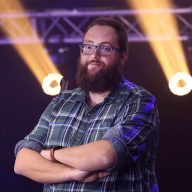
Technical Production Manager
I’m Jim Thew, a UK-based Technical Production Manager and multi-disciplined event technician. I support agencies, venues, production companies and end-clients delivering live, corporate and hybrid events, particularly where the detail matters and the schedule is tight.
My background is hands-on: I came up through technical roles across audio, video, immersive, broadcast and lighting, and I still enjoy being on the tools when a project needs it. Alongside that, I provide production leadership, technical planning, supplier coordination, H&S management, crew oversight and clear documentation, so productions are practical, safe and seamless on site.
If you need someone who can own delivery from early planning through to show day, or step in as a senior technician who can operate, troubleshoot and keep departments moving, I can slot in quickly and work as part of your team.
What I do
Production Management & Technical Leadership
I lead delivery from pre-production through to show day. Technical planning, CAD Drawings, H&S, schedules, supplier coordination, crew oversight, and documentation that keeps stakeholders aligned.
- Technical scopes, build schedules and show documentation
- Budget responsibility and practical problem-solving under time pressure
- RAMS and CDM documentation.
- CAD floorplans and production drawings for sign-off
- Supplier coordination across audio, video, lighting, staging, rigging and broadcast.
- On-site leadership through build, show and de-rig.
Multi-disciplined Technical Support
When you need experienced hands on site, I can step in as a senior technician—operating, troubleshooting and delivering when plans shift or timelines tighten. I started out on the technical side and have spent years delivering live, virtual and hybrid events in high-pressure environments where standards are high and timing matters. I’m comfortable slotting into an established crew structure, taking ownership of a defined role, and keeping show delivery stable. I regularly deliver hands-on technical roles across:
Video, content and cameras
- PowerPoint operation and show content/playback
- Graphics switcher operation and vision workflows
- Camera directing support, including vision mixing and PTZ operation
Lighting
- Lighting design, pre-visualisation and 3D / VR modelling
- Plans and patch lists
- Programming and operation on ChamSys and Avolites
Audio and RF
- Corporate sound engineering across in-room, broadcast, virtual and hybrid environments
- RF coordination: RF management, frequency planning and troubleshooting, including coordination with regulators where required
Projection
- Projection specification and setup
- Edge blend and projection mapping support
Streaming, virtual and hybrid delivery
- Live streaming / studio event delivery as an OBS, Livestream Studio and vMix operator
- Virtual event delivery through Teams, Zoom, Webex, BlueJeans and bespoke web-based platforms
- Hybrid event delivery: in-room show plus remote contributors and stream outputs
Interactive
- Audience interaction tools including Slido, Mentimeter and TurningPoint (polling, Q&A moderation, results output)
Networks, comms and control
- Networking technician for live and temporary event environments
- Dante audio networking: design support, deployment, patching and fault-finding
- Lighting networks: Art-Net and sACN setup, routing and troubleshooting
- Comms: wired and wireless comms systems, configuration and on-site management
- Video over IP workflows and practical on-site troubleshooting (including signal routing, bandwidth considerations and endpoint configuration)
Relationships that make delivery easier
A large part of production management is knowing who to call, how to get answers quickly, and how to keep standards consistent. Over the years I’ve built established relationships with production companies, venues, crew and specialist suppliers across the UK, along with trusted contacts across Europe.
What that means in practice:
- Faster mobilisation of the right people and equipment, without starting from zero
- Smoother coordination between departments, suppliers and venues
- Reliable contingency options when plans change or timelines compress
- Consistent delivery standards across multi-supplier projects
- Confident coordination of European suppliers on international programmes
How I work
I take a technical-first approach to event production. The aim is to translate the brief into a buildable, deliverable plan early, then manage delivery with clear documentation, realistic scheduling and tight coordination.
- Define the objective
Confirm what the client needs to achieve, the audience experience, the format (live/hybrid/virtual), and what “success” looks like in practical terms. - Confirm venue constraints
Lock down access and loading, rigging points, power, network availability, sightlines, noise limits, curfews, venue specific rules and any permits or approvals that will affect delivery. - Set the budget framework
Establish the working budget, priorities and trade-offs, and where it makes sense to spend versus simplify. - Draw and model the event
Produce CAD layouts and, where useful, 3D/pre-vis to demonstrate technical feasibility and audience experience before anything is ordered or booked. - Build the plan (scope, budget and timeline)
Create a clear technical scope, initial cost schedule and project timeline that stakeholders can sign off, with assumptions and dependencies stated upfront. - Assemble the team and suppliers
Confirm suppliers, crew structure and technical roles. - Produce build schedules
Develop detailed build/show/de-rig schedules with department sequencing, hold points, sign-offs and realistic time allowances to avoid last-minute firefighting. - Coordinate logistics
Manage equipment lists, deliveries, access plans, crew calls, transport and practical site organisation so the build runs smoothly and safely. - Produce and compile H&S / CDM documentation
Write RAMS and compile/consolidate supplier RAMS into a coherent pack aligned to the build sequence, including permits, method statements, briefings and compliance requirements. - Produce the EMP and call sheets
Issue the Event Management Plan, contact lists, comms plan, running orders and call sheets so everyone has the same information and escalation routes are clear. - Deliver
Lead on site through build, show and de-rig, with clear comms, stage management, and calm problem-solving. - Debrief and improve
Run a post-event debrief, capture lessons learned, and feed actions back into the next delivery so each project benefits from what was learned on the last.
Availability and enquiries
If you’d like to discuss a project, send the basics and I’ll come back with availability and next steps.